By Patrick Opio
Senior Communications Officer
Apac District Vice Chairman, Tonny Odongo has lauded the management of Lira University for its focused vision in the development of the institution.
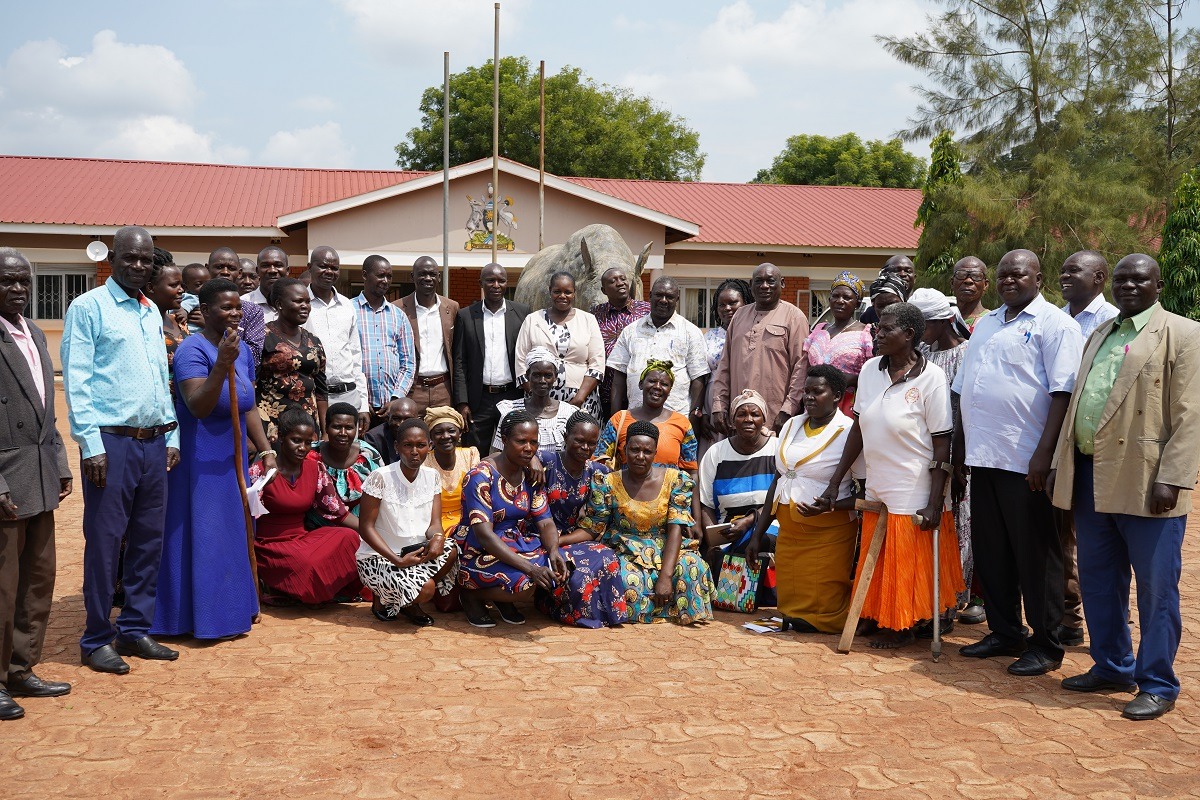
While addressing a Research Dissemination workshop at Community Hall in Apac district on 16th July 2024, Odongo observed that Lira University has a strong team, the reason it is growing steadily and faster. “As local leaders, employers and the general community of Apac, we are proud of the products from Lira University and we shall continue to market the university in the forum we address,” Odongo notes.
The LC5 boss also encouraged women to vie bigger or top political positions as they equally compete with men. “Do not run for the affirmative elective positions only but prepare to challenge men for District Chairperson or Members of Parliament slots,” he reveals.
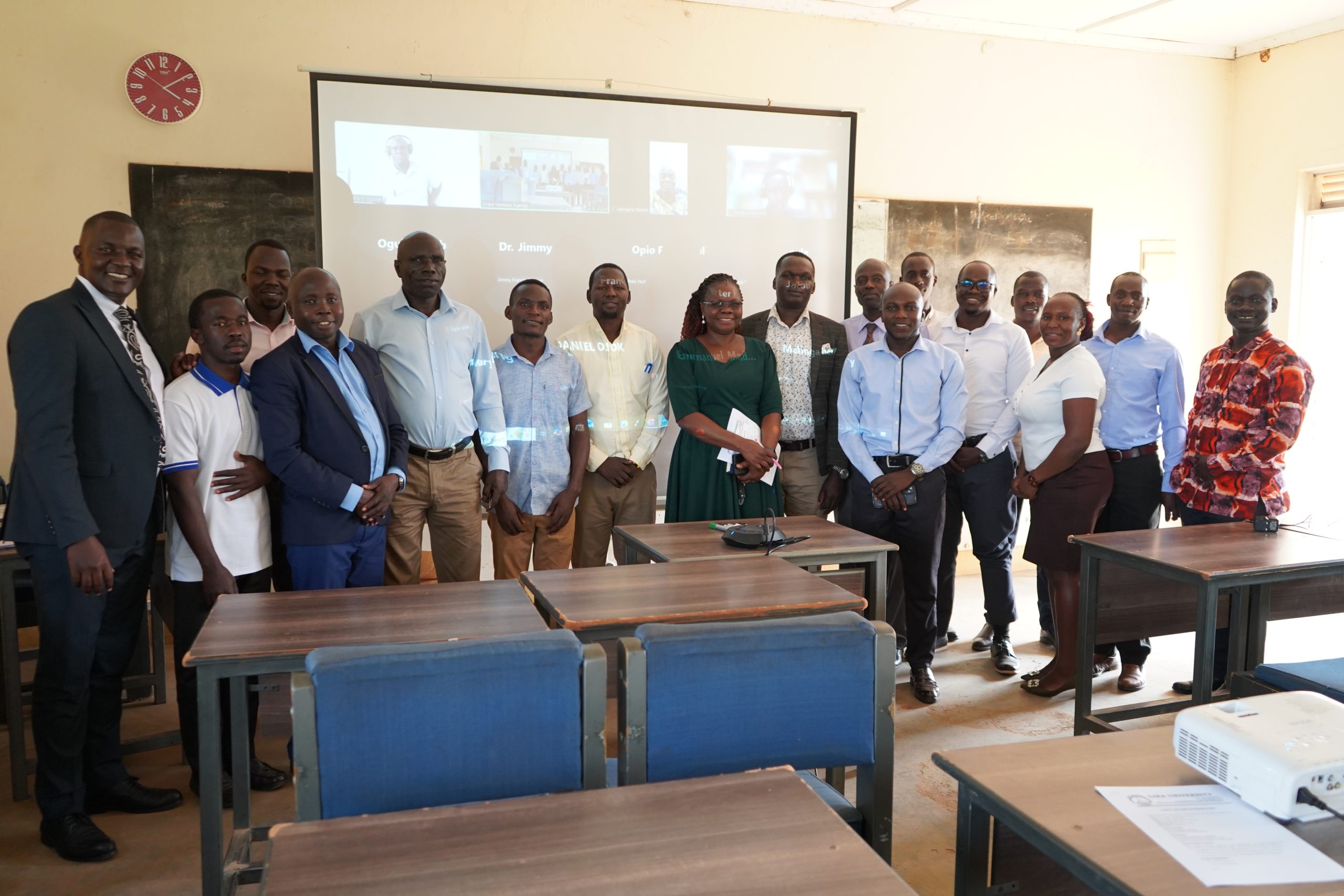
The Research, conducted by Lira University Team headed by Assoc. Prof. Mary Ejang, in Akokoro and Apac subcouties, attracted 40 participants. Research Title: “An analysis of Political Glass ceiling, challenges and opportunities for women Leadership in Apac District Local Governance.”
The purpose of this research was to investigate the underlying hidden/invisible socio-economic barriers (glass ceiling) that limit women from competitive political leadership participation in Apac District Local Governance.
The Deputy Chief Administrative Officer, Paul Mbuki, hailed the University for taking research seriously. “Research and innovations are the best practices a university has to prioritize. They breed new knowledge or perfect the existing knowledge or skills,” Deputy CAO asserts.
Mbuki said that women are less corrupt when entrusted with leadership positions. “More women should be elected into political offices, they are better than men in accountability and financial management,” Mbuki reveals.
Prof. Ejang, also the Dean of Faculty of Management Sciences, noted that, globally, women are underrepresented and held only 29% of senior management positions in organisation by 2020, with several studies showing that across different countries over time, the characteristics of successful leaders resemble stereotypical masculine characteristics.
“Feminine traits not admired, explaining the difficulties of women in reaching leadership positions”, She asserts. Leaders are mainly seen to have masculine traits and characteristics similar to men and not to women,” Prof. Ejang adds
Explicitly, Prof.Ejang observes, women encounter a glass ceiling that is hard to break through in leadership. Women have historically been underrepresented in leadership positions across private and public organizations around the globe due to discriminations and unfair treatment.
She says, “Gender inequality and gender discrimination remain very real challenges for women workers in general, and especially so for women striving for leadership positions. Women have long faced gender stereotypes in the workplace, particularly when it comes to leadership positions. “
The Don noted that stereotypes such as women being too emotional, not assertive enough, or lacking in confidence can hinder their progress in leadership roles.
Therefore, she reveals, Political glass ceiling refers to ‘the unseen, yet unbreachable barrier’ that keeps women from rising to the upper ranks of the corporate ladder, regardless of their qualifications or achievements.
Prof. Ejang further indicated that gender inequality prevents either women or men from fully engaging in political and socio-economic activities.
Government of Uganda made significant strides to promote gender equality through Article 21 of the 1995 Constitution, the National Gender Policy (2007) and Gender and Equity Strategy for Social Protection (2018).
Prof. Ejang observed that despite the efforts, women still lag behind men in access to political and socio-economic opportunities; women make up only 35% of Parliament seat and one out of five women still report experiencing gender-based discrimination in all spaces of life.
“Furthermore, 39% of Ugandans believe that men should be given priority for scarce jobs and that families are better off if women, rather than men, have primary responsibility for the home and children,” Dean asserts.
She noted that women make up to 51% of the total population in Uganda but they are marginalised in political governance at all levels.
Ejang revealed that the research study should inform policies and programmes on the equal opportunities for political representation, thus creating a positive change in political governance. The research should create local awareness at community, cultural and district in Lango sub-region on the benefits associated with equal political representation for men and women.
She advised that the study should inform interventions by government and development partners to eliminate cultural constraints and stereotypes that discriminate women in public spaces.
The Research Team are: Assoc. Prof. Mary Ejang (Principal Investigator -PI), Mr. Obote Denis,Co –PI, Ms Apio Sarah Okite, Co-PI, Mr. Okuna Victor, Co-PI and Assoc. Prof. Judith Akello Abal, Co-PI.