

- Home
- Mr. Okila Nixon
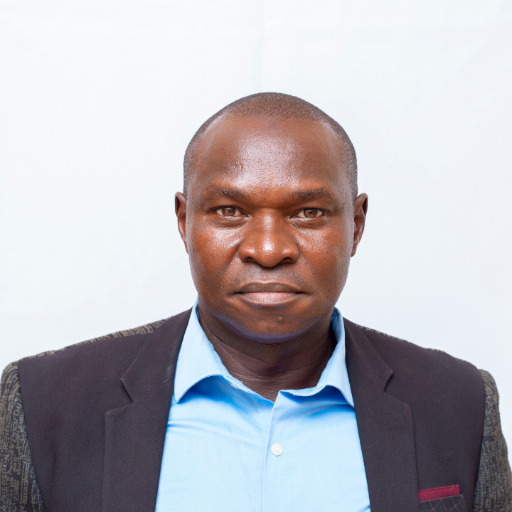
Mr. Okila Nixon
Lecturer
Research Links
- Google Scholar
- ORCID
- Research Gate
Mr. Okila Nixon
- Lecturer
- nokila@lirauni.ac.ug
- +256 772 855869
I am a computer scientist and researcher specializing in the application of artificial intelligence to address challenges in healthcare and public systems. My work focuses on computer vision, medical imaging, machine learning, and health informatics, where I develop intelligent systems for medical image classification, segmentation, and anomaly detection using advanced deep learning techniques such as convolutional neural networks, generative models, and transformer-based approaches.
My research integrates domain-specific medical data—including X-rays, ultrasound scans, and blood smear images—with structured population health records to improve diagnostic accuracy and enhance clinical workflows. I am particularly committed to developing interpretable, efficient, and scalable AI solutions tailored for low- and middle-income healthcare settings. My key interests include data fusion, model optimization, and deploying AI models on embedded systems for real-time decision support.
I serve as a Lecturer in the Department of Computer Science at Lira University, where I teach, mentor students, and conduct research in artificial intelligence and data science. I have also held the role of Head of Department, providing academic leadership, guiding curriculum development, and fostering research and innovation. In addition, I have worked as an Associate Consultant at the Uganda Management Institute, applying data science and digital technologies to support institutional and national development initiatives.
Through my academic and professional engagements, I strive to bridge the gap between research and real-world applications, leveraging AI-driven solutions to contribute to improved healthcare delivery and sustainable development.
Education & Qualifications
- PhD in Computer Science – Makerere University
- Master of Science in Computer Science – Makerere University
- Post Graduate Diploma in Education – Makerere University
- Bachelor of Science – Makerere University
Publications
- N. Byenkya, L. N. Nkalubo, R. Nakibuule, and N. Okila, “Adaptive object detection in dynamic road environments using YOLOv11 with continuous learning for real-time obstacle detection,” Discover Artificial Intelligence, 2026. https://link.springer.com/article/10.1007/s44163-025-00828-2
- N. Okila, A. Katumba, J. Nakatumba-Nabende, C. Mwikirize, S. Murindanyi, J. Serugunda, S. Bugeza, A. Oriekot, J. Bossa, and E. Nabawanuka, “Automated AI-based lung disease classification using point-of- care ultrasound,” Applied AI Letters, 2025, doi: 10.1002/ail2.70012.
- N. Okila, A. Katumba, J. Nakatumba-Nabende, C. Mwikirize, S. Murindanyi, J. Serugunda, S. Bugeza, A. Oriekot, J. Bossa, and E. Nabawanuka, “Lung ultrasound imaging dataset for accurate detection and localization of LUS vertical artifacts,” Scientific Data, 2025. [Online]. Available: https://www.nature.com/articles/s41597-025-05854-4
- A. Katumba, S. Murindanyi, N. Okila, J. Nakatumba-Nabende, C. Mwikirize, J. Serugunda, S. Bugeza, A. Oriekot, J. Bossa, and E. Nabawanuka, “A dataset of lung ultrasound images for automated AI-based lung disease classification,” Data in Brief, vol. 62, p. 112034, 2025, doi: 10.1016/j.dib.2025.112034.
- N. Okila, A. Katumba, J. Nakatumba-Nabende, C. Mwikirize, S. Murindanyi, J. Serugunda, S. Bugeza, A. Oriekot, J. Bossa, and E. Nabawanuka, “Deep learning for accurate B-line detection and localization in lung ultrasound imaging,” Frontiers in Artificial Intelligence, vol. 8, p. 1560523, 2025, doi: 10.3389/frai.2025.1560523.
- N. Okila, A. Katumba, J. Nakatumba-Nabende, J. Serugunda, C. Mwikirize, S. Murindanyi, S. Bugeza, A. Oriekot, J. Bossa, and E. Nabawanuka, “Automated lung disease classification using advanced ultrasound imaging techniques,” SSRN Preprint, 2025, doi: 10.2139/ssrn.5030016.
- L. Nkalubo, R. Nakibuule, and N. Okila, “Real-time object detection using an ensemble of one-stage and two-stage object detection models with dynamic fine-tuning using Kullback–Leibler divergence,” 2023. https://link.springer.com/chapter/10.1007/978-3-031-94439-0_8
- N. Okila, “B-line Artifact Localization in Lung Ultrasound Images Using YOLOv5-Po,” presented at the Data Science Africa Conference, Arusha, Tanzania, Jul. 18–22, 2022.
Research Interests
loading…
Grants Won & Awarded
loading…
Conference Presentations
loading…
