


By Patrick Opio
Senior Communications Officer
Lira University Vice Chancellor, Prof. Dr. Jasper Ogwal Okeng has lauded staff for successful grant writing, bringing vital financial support, enhanced research capacity, and countless prestige to the university.
Prof. Dr. Ogwal Okeng said, not only does grant writing improve the academic structure of the University, but also benefits the University community through research in various areas including diseases and treatments.
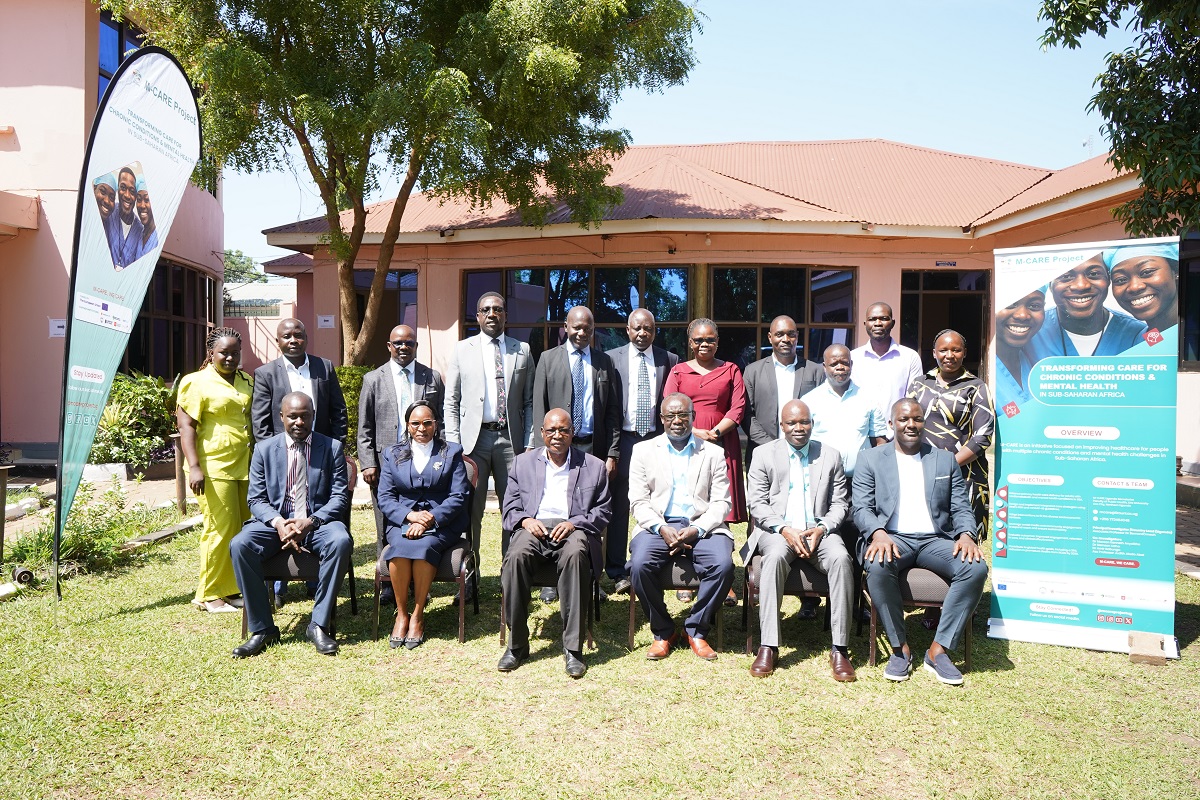
He was addressing the M-CARE Uganda Technical Advisory Committee during its inaugural workshop at Gracious Palace Hotel , Lira City, on 3rd September 2026. The Committee is chaired by the Vice Chancellor.
The M-CARE Lira University Project Technical Advisory Committee (PTAC) will provide technical guidance and strategic advice to support the effective implementation of the M-CARE Project and achievement of its objectives.
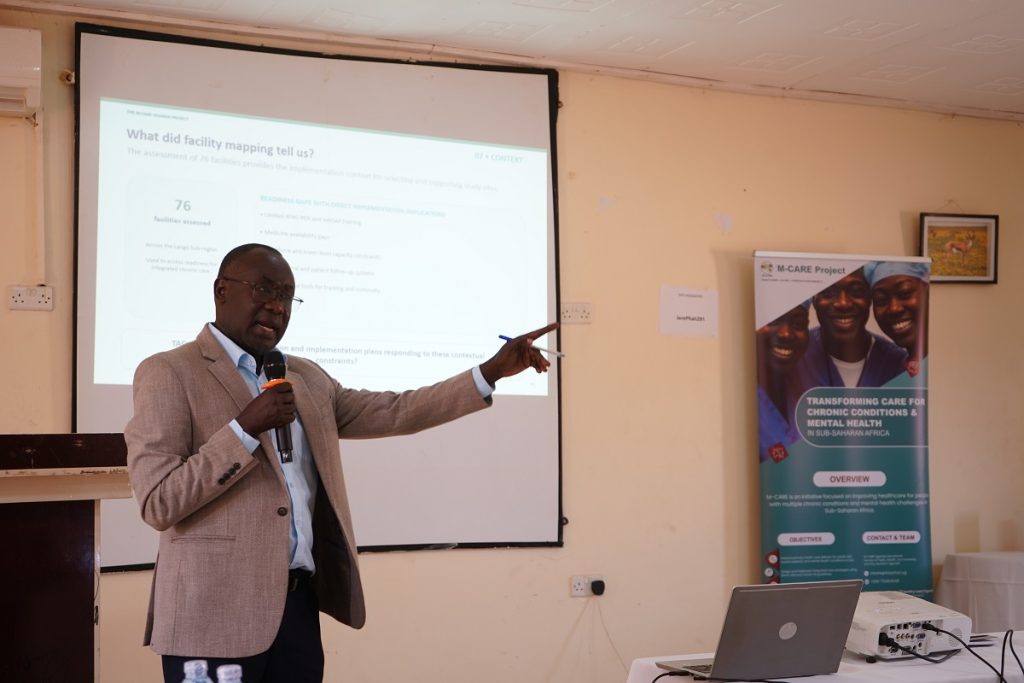
Assoc. Prof. Dr. Omech Bernard making a presentation during the meeting
Prof. Ogwal Okeng underscored the importance of research saying it drives innovation and improves classroom teaching, besides building vital problem-solving skills for staff and students. “I am very happy with the university staff who keep winning grants for doing research. Like this one on health will benefit all, globally, specifically the Lango sub-region and Uganda as a whole, please keep it up,” he said.
The Project Principal Investigator, Assoc. Prof. Dr. Bernard Omech said the M-CARE Project is an international health initiative operating in Sub-Saharan Africa, including Uganda, Kenya, and Ghana, targets improving primary healthcare for people with chronic illnesses and mental health challenges.
The M-CARE Uganda project being implemented in Oyam, Kole and Lira districts and Lira City will cost euros 700,000 (approx. Ush3 billion). The project that started in July 2025 will run for five years, implementing and evaluating integrated person-centred care for patients suffering from multiple diseases (NCDs).
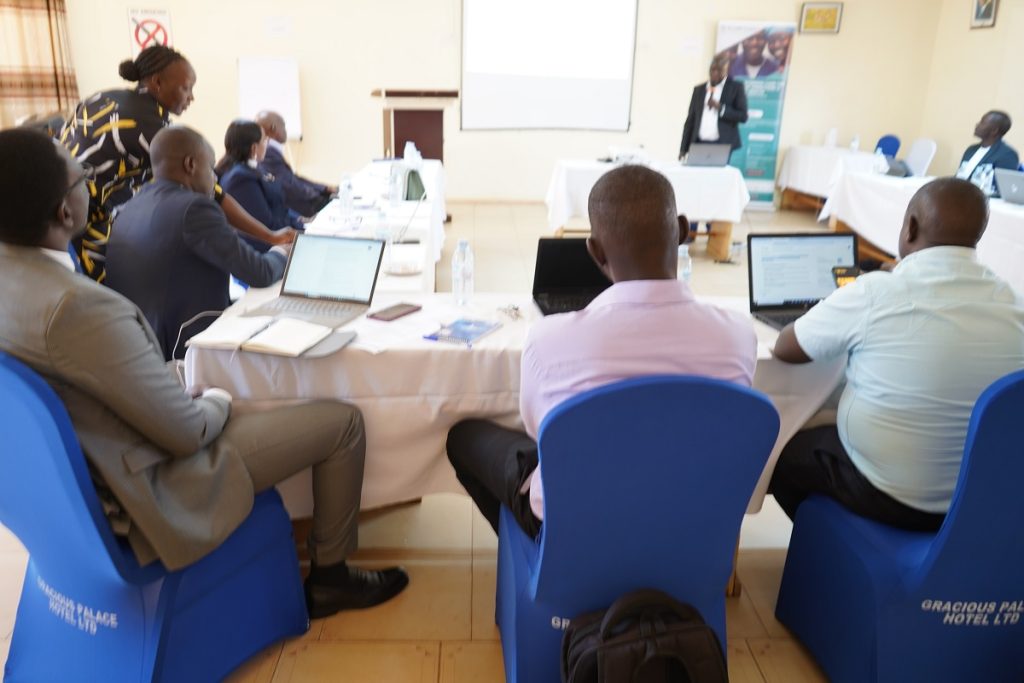
Dr. Udho Sampsom addressing the PTAC meeting
The project investigators are: Prof. Charles Agyemang, PhD, (Principal Investigator), Assoc. Prof. Dr. Bernard Omech (Co-Principal Investigator), with the Co-Investigators Dr Maxson Kenneth Anyolitho, Dr Samson Udho, and Assoc.Prof. Judith Akello Abal.
On why M-CARE now, Prof. Omech said the problem is not simply multiple diseases, it is a health system organised around diseases rather than people. “For example, a person with multimorbidity can experience care as a series of disconnected services, this is not right, we wish if multiple NCDs could be checked at one particular patient’s visit at the facility, the better for effective service and treatment continuity,” he said.
He said, at a health facility today, a person seen for Hypertension may not be checked for diabetes and mental health cases hence fragmented treatment referral and follow-up for continuity.
“Our prayer is that all cases should be checked in one visit at the health facility, other than in different visits, to avoid fragmented service delivery, promote effective and efficient health service delivery to patients,” he said.
Prof. Omech said the M-CARE solution is to shift primary care from fragmented disease programmes to integrated, person-centred care. “The core principle: people do not experience diseases in isolation, therefore, care should not be delivered in isolation,” he reiterated.
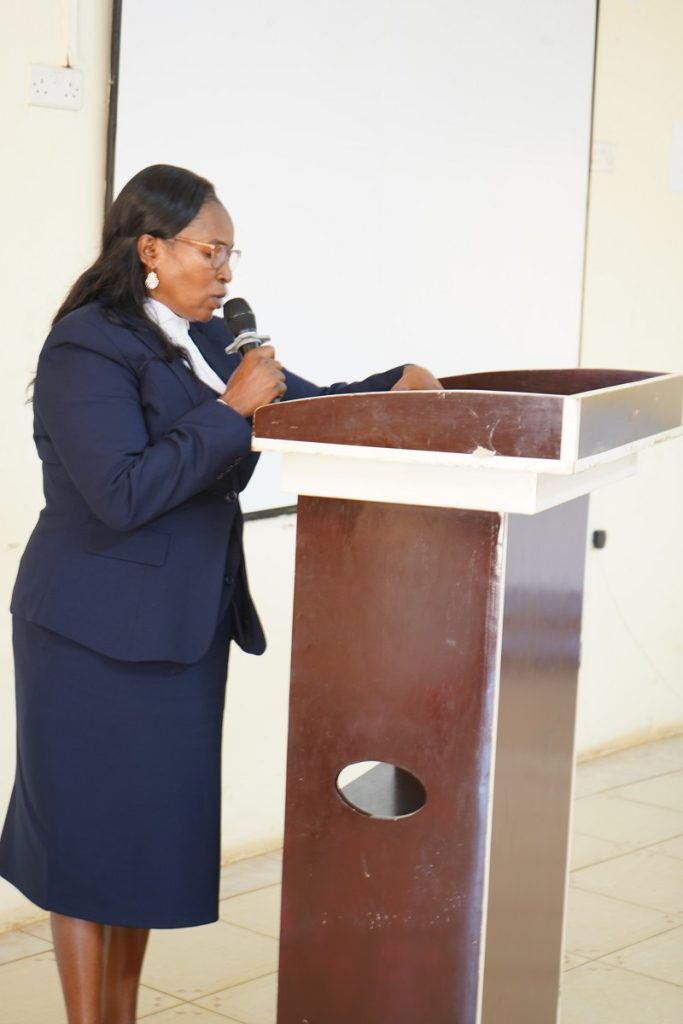
Assoc. Prof. Judith Akello Abal addressing the PTAC meeting
What exactly is being tested?
According to Prof. Omech, the scientific proposition links the care model to implementation strategies and measurable outcomes.
On the study design, he said Hybrid Type III Cluster Randomised Trial will be applied for testing the intervention and the implementation strategy in real-world Primary Health Care (PHC), with the primary question: does integrated care work—and can it be implemented effectively in routine primary care?
He said the project is being implemented in 60 primary health care facilities, clustered; 30 M-CARE intervention and 30 usual care, to measure the difference between the two approaches to NCD treatments.
What will the study measure?
The study will assess the effectiveness of the M-CARE integrated care model, patient-level health outcomes, quality of care and person-centred care and longitudinal change across study time points. While on the M-CARE implementation, the Study will evaluate its reach, feasibility and acceptability, adoption and fidelity, sustainability, implementation process and cost-effectiveness.
On the Project implementation status, he said, the Uganda team has moved from foundation and setup toward baseline and field rollout, adding that the assessment of 76 facilities from Lango sub-region provides the implementation context for selecting and supporting study sites.
The Facilitators during the PTAC induction included Assoc.Prof. Judith Akello Abal, the acting Deputy Vice Chancellor (Academic Affairs), Dr Maxson Kenneth Anyolitho, Dr Samson Udho, and Dr. Okello Nelson.
In attendance were the Ag. University Secretary, Mr. Atim Tom Richard, Ag. University Bursar, CPA. Anthony Elemu, Hospital Director, Lira Regional Referral Hospital, Dr. Andrew Odur, Dean Faculty of Nursing and Midwifery Sciences, Ms. Anna Grace Auma, Dean Faculty of Public Health, Dr. Marc Sam Opollo, Dean Faculty of Medicine, Dr. Olwa, Dr. Alol Emmanuel, Dr. Awio, Mr. D. Mugisha, Ms. Winnie Lamunu and Ms. Gutu Justine.