


By Patrick Opio
Senior Communications Officer
The Uganda National Council for Science and Technology (UNCST) has encouraged Research Ethics Committees (RECs) to ensure safety by providing structured oversight for studies involving human participants.
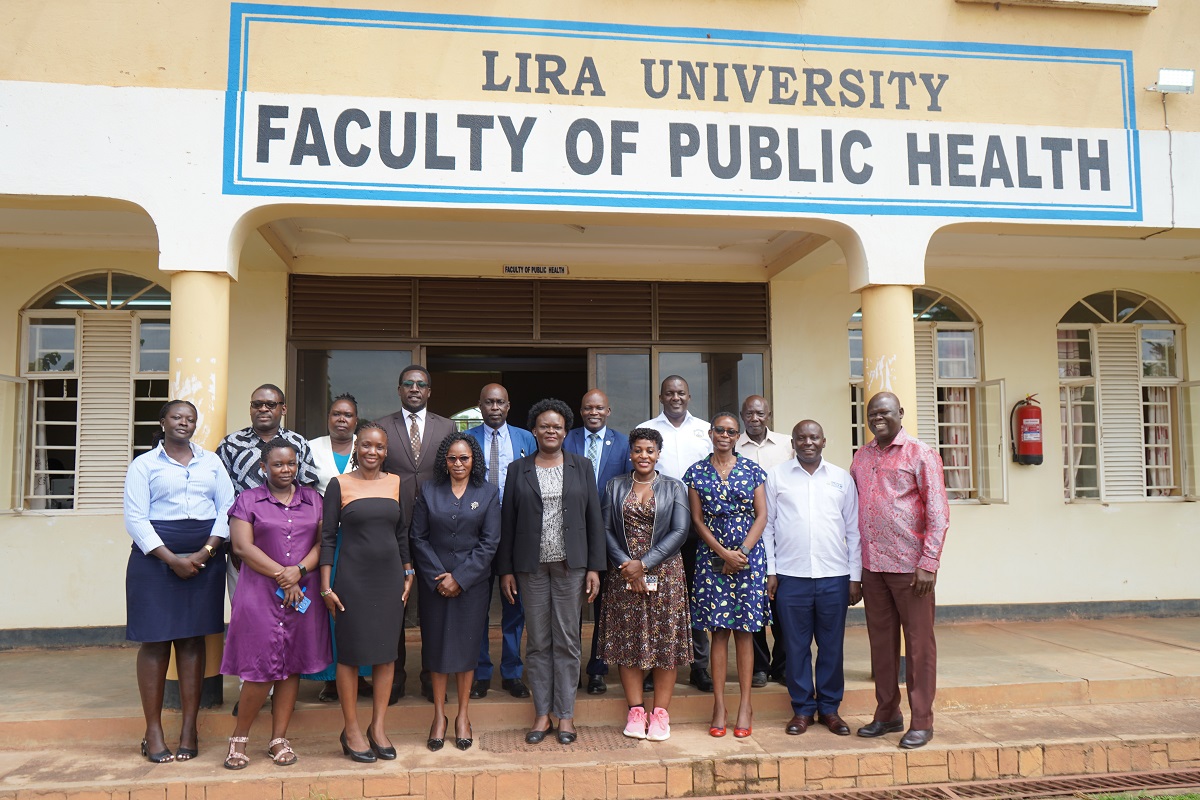
Dr. Sylvia Angubua Baluka told Lira University REC members that UNCST accreditation empowers RECs to ensure protection of the rights and welfare of research participants in Uganda. She was addressing a consultative meeting attended by the UNCST team and the University’s REC members at the University’s Public Health Board Room on 27th October 2026.
She said, REC guidelines ensure scientific integrity, support researchers and institutions.
Dr. Angubua Baluka, a Senior Lecturer at the College of Veterinary Medicine, Animal Resources & Biosecurity at Makerere University, led the team of the National Accreditation Committee of the UNCST.
Dr. Angubua said, to enforce genuine informed consent, Researchers should make sure participants fully comprehend study goals, procedures, risks, and their right to withdraw at any time. “Build public trust, boost community participation and confidence in scientific and medical advancements,” she advised.
Ag. Deputy Vice Chancellor, Assoc. Prof. Judith Akello Abal said the Lira University REC safeguards the dignity, rights, safety, and well-being of participants while handling research protocols. “Our REC protects vulnerable groups by encouraging researchers to implement extra safeguards for children, individuals with cognitive impairments, and marginalized populations,” Prof. Abal said.
On scientific quality and integrity, Prof. Abal implored RECs to ensure the study uses sound scientific methods and addresses a genuinely valuable question, must discourage data fabrication, falsification, and plagiarism and establish strict standards for collecting, storing, and sharing sensitive or genetic data.
Prof. Abal lauded UNCST for the mentorship support rendered to LUREC. “We are happy UNCST makes our LUREC grow every time they visit us here. This is great, we appreciate this partnership and support,” she said.

Dr. Angubua Baluka chairing the meeting at the Public Health Board Room on 27th October 2026
Dr. Andrew Odur, LUREC Chairperson, enumerated key achievements including their ability to assess ethical acceptability, informed consent, participant safety, privacy and confidentiality. LUREC approved 408 studies in the last three years.
On multidisciplinary oversight, Dr. Odur said, the Lira University REC engages of members from different professional backgrounds to support balanced ethical deliberation.
“We give feedback to researchers to strengthen protocol quality and compliance with ethical requirements, conduct webinar sessions with students and staff, “Dr. Odur explained.
He revealed that LUREC engages the University leadership for coordination of activities to support REC operations, adding that they strengthen systems and compliance, review Standard Operating Procedures (SOPs) to improve alignment with the Uganda National Guidelines for Research involving Humans as Research Participants, 2025.
LUREC has developed an initial review completeness and classification checklist to support consistent screening and routing of submissions, introduced efforts to strengthen tracking of protocol decisions, investigator correspondence and continuing-review requirements.
The Ag. University Secretary, Mr. Atim Tom reaffirmed the university’s resource support to REC for effective and efficient implementation of their planned activities.
CPA. Anthony Elemu, the Ag. University Bursar, said, the University Management plans to increase LUREC’s funding in the 2027/2028 financial budget. “We shall work as a team to strengthen LUREC, its normal functioning will boost research in the region, country and the university, in particular,” CPA. Elemu said.
Chief Quality Assurance Officer, Dr. Michael Peter Owiny said, RECs must always confirm that a study’s design is reliable, sound, and capable of yielding meaningful results rather than wasting resources on flawed research.
“RECs should have the capacity of identifying potential harms to participants, seek how to minimize the harms. The researcher should clearly justify the expected social or individual benefits,” Dr. Owiny said.