

By Patrick Opio
Senior Communications Officer
The Minister of Science, Technology and Innovation – Office of the President, Hon. Eng. Jonard Asiimwe Akiiki, has encouraged Lira University staff and students to move beyond filing patents or exhibiting prototypes to building active local enterprises and manufactured products.
Hon. Eng. Asiimwe Akiiki urged researchers to turn academic research and prototypes into marketable products, commercial enterprises, and practical value chains. He was addressing staff, students of Lira University and neighbouring secondary schools during his visit on 7th November 2026.
He says his Ministry is committed to safeguarding the patent rights of student and school-based innovators, ensuring public-sector or investor use follows formal procedures so creators and the country benefit.
On multidisciplinary shared facilities, the Minister advocates for shared innovation infrastructure that supports multi-person teams and broad value chains rather than isolated projects.
The Minister advocates for stronger collaboration between universities, private-sector tech investors, and government policy to close gaps in the national science, technology, and innovation (STI) sector.

He reveals that Universities are important centres for generating knowledge, advancing research and developing practical solutions to societal challenges. “Researchers’ work can improve livelihoods and enhance productivity,” he adds.
He says the Ministry for Science, Technology and Innovation – Office of the President is working to strengthen the role of universities in Uganda’s development, in line with the long-standing vision of H.E. President Yoweri Kaguta Museveni to harness science, technology and innovation as drivers of national progress.
Through engagements with universities across the country, Hon. Eng. Assimwe explains that the Ministry seeks to strengthen collaboration among academia, industry and communities, helping translate research, innovation and talent into practical solutions that advance Uganda’s industrialisation and socio-economic transformation.
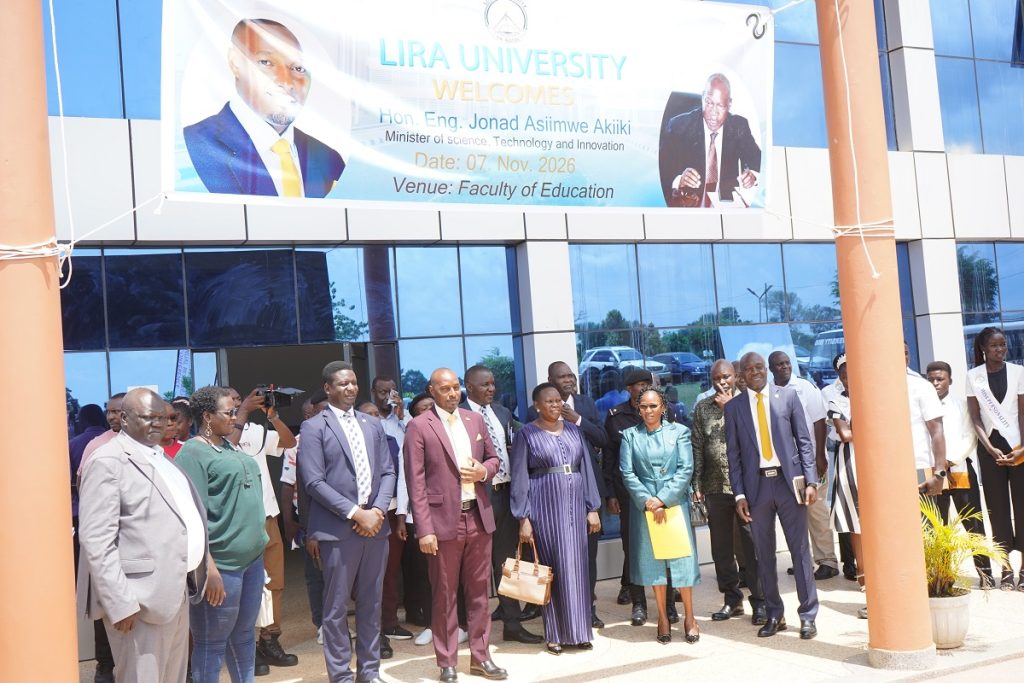
The University Vice Chancellor, Prof. Jasper Ogwal Okeng says Lira University’s distinctive strength lies not only in its niche of Applied Health Sciences and Technology, but also in its vast strategic land resource and development potential.
The University’s main campus sits on 621 acres in Lira City, other land includes 201 acres in Kole, with the title under process, and 344 acres in Amolatar, earmarked for the development of the Faculty of Agriculture, the Faculty of Marine Sciences, and the GRO Project – a Fish Processing Facility and Commercialisation Centre.
On infrastructure readiness and investment pipeline, Prof. Ogwal Okeng says, Lira University’s infrastructure development projects have been admitted into the Public Investment Programme (PIP) after meeting the relevant development requirements, including the Environmental and Social Impact Assessment (ESIA).

Acting Vice Chancellor, Dr. Andrew Ojulong, reveals that the University has undertaken the necessary planning to translate the University vision into infrastructure. “Our projects have been admitted into the Public Investment Programme, following fulfilment of the required development conditions, including environmental and social impact requirements,” he explains, adding, “These include the Lira University Infrastructure Development Project II, covering modern teaching facilities, a Multipurpose Library Complex and expansion of the University Teaching Hospital, as well as the Institutional Development Project for medical, laboratory, ICT and research equipment.”
Dr. Ojulong urged the Ministry and the STI ecosystem to support and champion investment in Lira University’s STI infrastructure and innovation ecosystem. In particular, we seek clarity and partnership on practical models for:
• Research commercialisation and proof-of-concept funding;
• Intellectual property management and technology transfer;
• Industry and private-sector partnerships;
• Business incubation and student entrepreneurship;
• Science parks and innovation infrastructure; and
• Sustainable funding mechanisms that enable promising research to move from the laboratory to the marketplace.
The proposed Faculty of Business and Management, with a Business Incubation Hub, alongside health sciences, agriculture, marine sciences and emerging science park initiatives, presents an important opportunity to create an integrated innovation pipeline, from ideation and research, to prototyping, intellectual property protection, incubation, production and commercialisation.
Dr. Ojulong notes that the University Library and ICT infrastructure will also be central to this transformation. Through the Technology and Innovation Support Centre, he says, research data management, patent landscaping, industry intelligence, open-access systems and institutional knowledge repositories, the University can strengthen the visibility, protection and utilisation of its intellectual assets.
Dr. Ojulong says the University’s vision is fully aligned with Uganda’s national development aspirations and the country’s Science, Technology and Innovation agenda. “We believe that strategic investment in Lira University will not only strengthen one institution; it will create opportunities for Northern Uganda and the nation to generate home-grown solutions, enterprises, skilled innovators and technologies,” he explains.
He reveals Lira University’s commitment to work closely with Government, industry, development partners and communities. “We are ready to map our research assets, strengthen our innovation and intellectual property systems, build effective partnerships and establish practical pathways for research commercialisation,” Dr. Ojulong asserts.
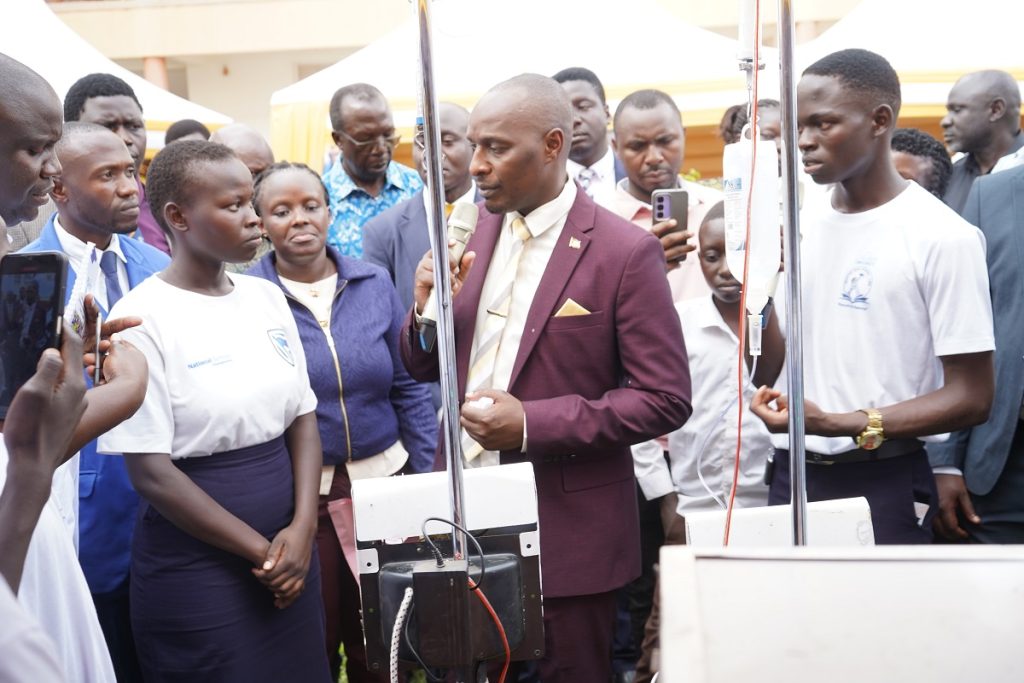
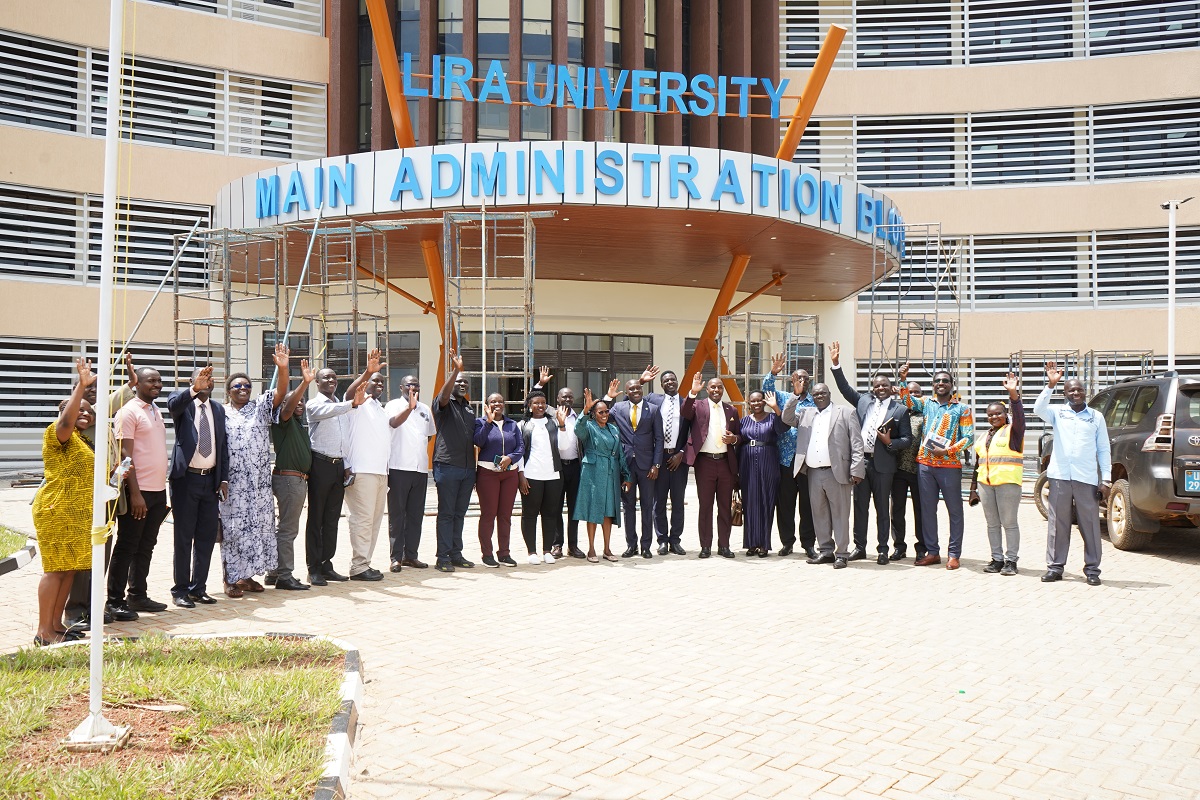
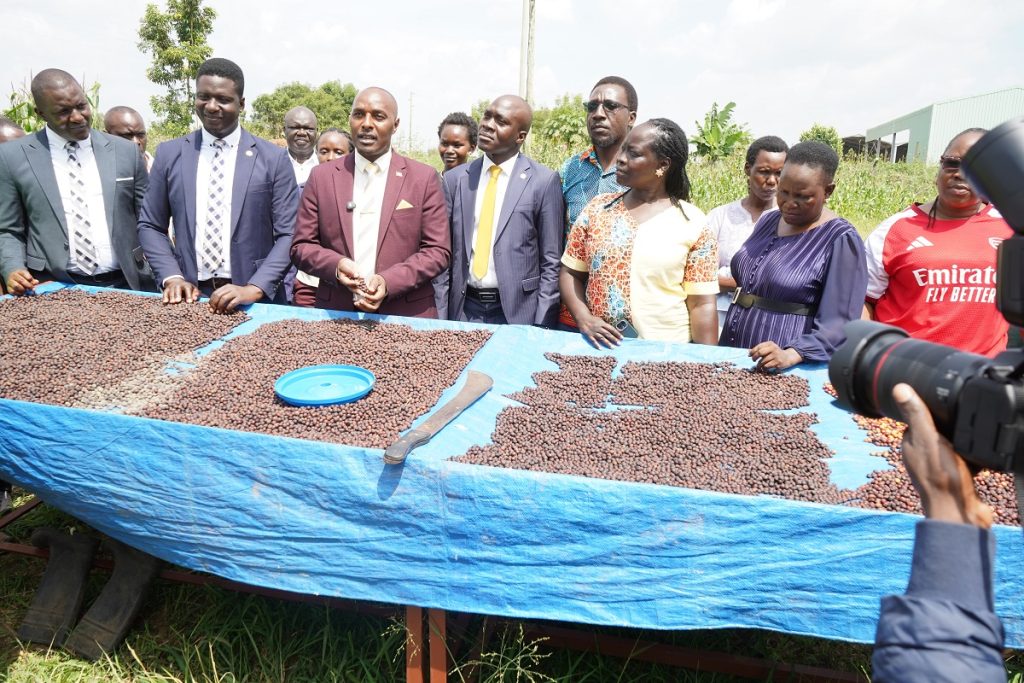
There was a tour of selected university facilities and innovation spaces, exhibition and demonstration of research innovations, presentations on research-to-innovation and commercialization pathways and engagement on international collaborations and partnership opportunities.
Among those present were Lango Parliamentary Association Chairperson, Hon. Patrick Obura, the University Council Chairperson, Mr. David Geoffrey Opiokello, Vice Chairperson Council, Ms. Nellie Florence Okullo, Chairperson University Appointments Board, Mr. Bosco Onyik Ogwal, Ag. Deputy Vice Chancellor (Academic Affairs), Assoc. Prof. Judith Akello Abal, members of Top Management, Faculty Deans and Heads of Department.
