


By Patrick Opio
Senior Communications Officer
Lira University Council, chaired by Mr. Geoffrey David Opiokello, has approved a total annual budget estimates of 65,760,613,715 for the 2026/2027 financial year, up from the 2025/2026 financial year’s Shs 28,775,235,639.
While presenting the budget funding sources, Finance, Planning and Investment Committee Chairperson, Mr Timothy Jokkene Okee, said the Government of Uganda will provide shs 56,012,411,269, User Fees Collections from the University Teaching Hospital to raise shs 825,194,700, Lira University Research Ethics Committee (LUREC) Budget shs375,277,790 and shs8,547,729,956 being Off-Budget Estimates (Externally Funded Budgets).
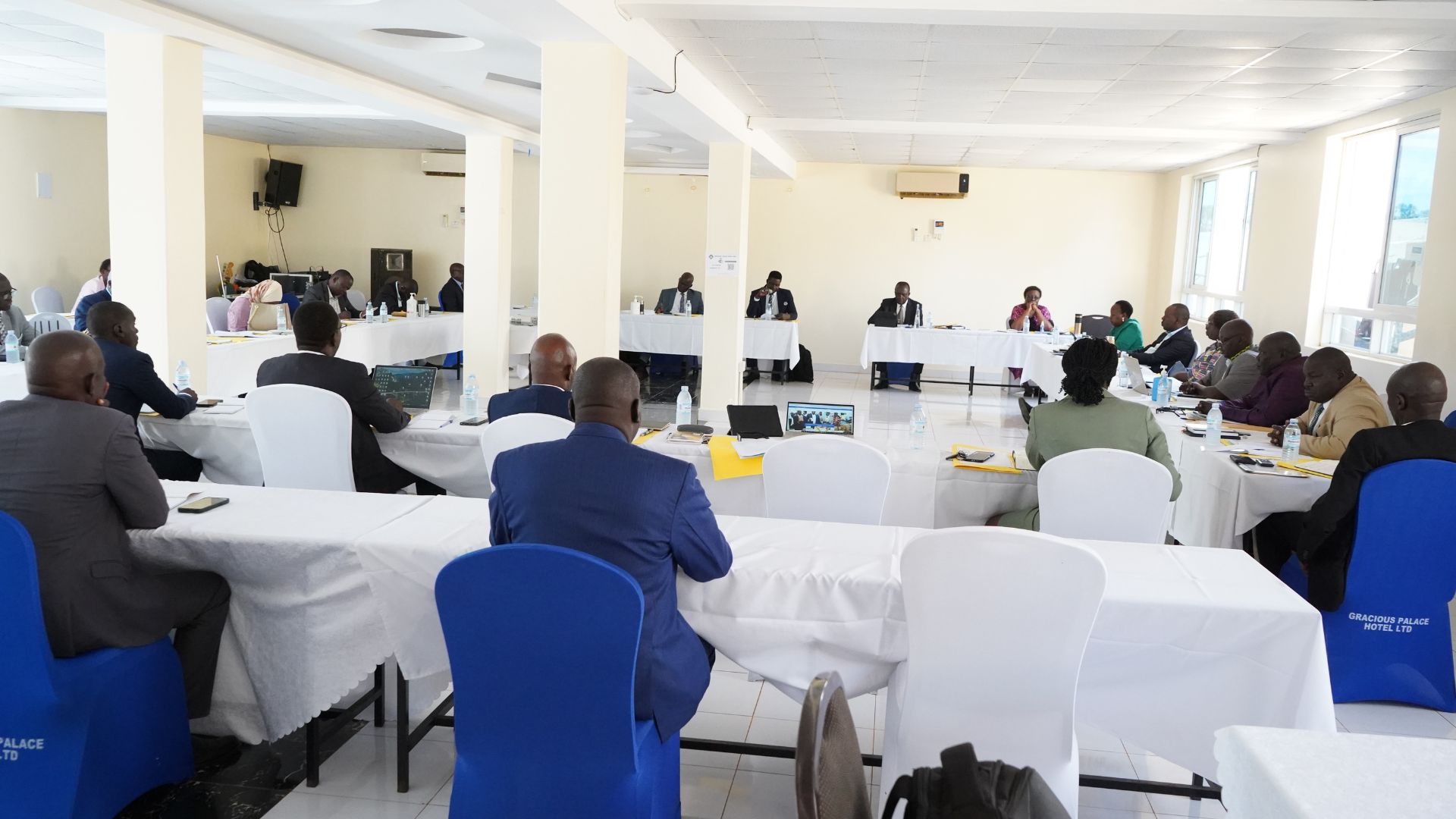
The Council meeting was convened on 29th May 2026 at Gracious Palace Hotel, Lira City, to deliberate upon, and approve the Budget Estimates, among others.
Mr. Jokkene revealed that the budget estimates arise from the recommendations of the Finance, Planning and Investment Committee meeting held on 20th May 2026, during which the draft budget presented by Management was carefully scrutinized and reviewed in line with the University’s strategic priorities, government policy guidelines, and the resource framework for the forthcoming financial year.
He noted that the FY 2026/2027 Budget Estimates represent the 11th budget of Lira University since its inception and are intended to facilitate the continued implementation of the University’s core mandate of Teaching, Research, Innovation, and Community Engagement.
The estimates, Mr. Jokkene said, further aim to support institutional growth, enhance service delivery, strengthen academic and administrative operations, and improve infrastructure development within the available resource envelope.
Deputy Bursar, Mr Elemu Anthony, said the FY 2026/2027 Budget Estimates for Lira University provide the necessary framework and resources for the implementation of the University’s strategic objectives in alignment with the priorities of the Ministry of Education and Sports, the National Development Plan, and the Human Capital Development Programme.
He said the University’s Vision remains “A Beacon Centre for Applied Sciences and Technology,” adding, and in pursuit of this vision, the University continues to strive towards providing access to quality higher education, promoting research and innovation, and conducting professional training geared towards the delivery of appropriate health services for a sustainable healthy community and environment.
Mr. Elemu noted the realization of this vision will depend on the effective implementation of the budget interventions and priority programmes presented before Council today. These interventions are intended to strengthen teaching and learning, research and innovation, infrastructure development, digital transformation, staff development, governance systems, and student welfare.
He revealed that the preparation of the FY 2026/2027 Budget has nonetheless been undertaken under significant financial constraints, particularly in light of the increasing demand for infrastructure expansion, teaching facilities, staff accommodation, research infrastructure, and other institutional development needs. Consequently, the University has had to make difficult resource allocation decisions in order to prioritize critical expenditure areas and maximize the limited available resources.
Mr. Elemu said, priority has been given to strategic interventions that directly support quality higher education delivery, institutional growth, and operational efficiency, while efforts have also been made to identify savings and improve expenditure management in non-priority areas.
“It is our conviction that the proposed budget allocations will enhance the teaching and learning environment, improve staff welfare and institutional capacity, and strengthen the University’s contribution to national development through training, research, innovation, and community engagement, particularly in the fields of Health Sciences, Technology, and Management Sciences,” he said.
Mr. Opiokello noted said the Council was mandated to carefully examine, discuss, and approve the budget estimates before submission to the Ministry of Finance, Planning and Economic Development (MoFPED) and other relevant line Ministries in accordance with the Government budgeting process and timelines.
He lauded Council members and the University Management for their continued commitment and valuable contribution toward the growth and transformation of Lira University. He revealed that the mandate of Lira University to prepare and present annual Budget Estimates and Work Plans is derived from the legal and policy framework governing Public Finance Management and Public Universities in Uganda.
The University Bursar, also Acting Deputy Vice Chancellor (Finance Administration), Mr. Nathan Hasahya Haghobi said, in accordance with Article 155(2) of the Constitution of the Republic of Uganda, public expenditure is required to be authorized and managed in line with approved Government budgetary procedures and accountability requirements. Further guidance is provided under Section 9 of the Public Finance Management Act, 2015, which mandates all Public Institutions to prepare and submit annual budgets, work plans, and performance reports in compliance with the national budgeting framework and timelines issued by the Ministry of Finance, Planning and Economic Development.
Mr. Haghobi said the budgeting process is also guided by the National Budget Act, 2001, which provides for a systematic, participatory, and transparent budgeting process within Government Institutions and Agencies. In addition, the Universities and Other Tertiary Institutions Act, 2001 as amended in 2006, vests the University Council with the responsibility of overseeing the proper administration, financial management, and strategic direction of the University, including the approval of annual plans and budgets.
Accordingly, Mr. Haghobi said the University Council, through its Finance, Planning and Investment Committee, is mandated to examine, review, and recommend the annual Budget Estimates and Work Plans for approval prior to their submission to the Ministry of Finance, Planning and Economic Development and other relevant Government authorities.
The overall theme for the FY 2026/2027 National Budget is “Full Monetization of Uganda’s Economy through Commercial Agriculture, Industrialization, Expanding and Broadening Services, Digital Transformation and Market Access.”
The DVC (F&A) further reveals that Lira University fully aligns itself with this national development agenda through the continued promotion of human capital development, research, innovation, and community engagement. The University remains committed to harnessing digital transformation and technology-driven approaches in the delivery of quality higher education, enhancement of teaching and learning, research productivity, institutional efficiency, and improved service delivery.
In pursuit of the year’s theme, Mr. Haghobi said the University will continue to strengthen academic programmes, promote innovation and skills development, expand digital infrastructure, and support interventions that contribute to national socio-economic transformation and sustainable development.
On the Budget focus, he said the FY 2026/2027 Budget Estimates are aimed at strengthening the University’s capacity to operate as a competitive public university through investment in governance, infrastructure, staffing, teaching and learning, research and innovation, digital transformation, student welfare, and land management.
Mr. Haghobi noted that the budget will support key output areas including teaching and training, research and publications, community outreach, student welfare, guild services, and administrative support, adding that it is further intended to advance the University’s strategic objectives of expanding access to quality higher education, promoting research and innovation, strengthening community engagement, improving infrastructure, and enhancing institutional governance and management capacity.
He noted that the proposed increase in the resource envelope for FY 2026/2027 is largely attributed to an additional allocation of UGX 10.1 billion. Of this amount, Mr. Haghobi said, shs 10 billion has been earmarked under the Government of Uganda Development Budget to support the completion of ongoing infrastructure facilities, while shs 100 million under Non-Wage recurrent expenditure has been provided to strengthen the Planning Function through research, monitoring, evaluation, and evidence-based planning initiatives.
He appreciated the Government of Uganda, through the Ministry of Finance, Planning and Economic Development (MoFPED), for fulfilling its obligation and commitment in releasing funds, with the exception of funds for part of domestic arrears and Capital Development.
“Actually, the University Management wrote follow up letters requesting for additional expenditure limits to MoFPED, still awaiting response,” he explained.
Budget Assumptions |
|
|
|
|
|
|
|
Mr. Haghobi explained the implementation of the FY 2026/2027 Budget Estimates for Lira University and the achievement of the planned outputs and strategic objectives are premised on the following assumptions:
- That the projected student enrolment levels will be attained in order to sustain the estimated collection of Non-Tax Revenue (NTR).
- That students will pay tuition and other functional fees in a timely manner to facilitate smooth implementation of planned academic and administrative activities.
- That Government releases will be made in accordance with the approved cash flow projections and within the stipulated timelines.
- That there will be no budget cuts or reductions to the approved Government funding allocations during the course of budget implementation.
- That macroeconomic conditions, including inflation rates, commodity prices, and exchange rates, will remain relatively stable and therefore not significantly affect the planned costs of operations and project implementation.
- That Government fiscal and financial policies will remain stable throughout the financial year and will not adversely affect budget execution and programme implementation.
- That procurement and disposal processes will be undertaken efficiently and within the prescribed timelines to avoid delays in implementation of planned activities and development projects.
Among the Council members who attended the meeting were Vice Chairperson Council, Ms Nellie Florence Okullo, Acting Vice Chancellor, Dr. Andrew Ojulong, Deputy VC (Academic Affairs), Assoc. Prof. Okaka Opio Dokotum, Deputy VC (Finance & Administration), Mr. Augustine Oyang Atubo (University Secretary), Dr. Florence Ebila, Dr. David Martin Ogwang, Dr. Eric Gitta, Dr. Rossie Agoi, and Hon. Sam Atul,
Others were Hon. Frederick Odongo, Dr. Robert Omara, Mr. Bosco Onyik Ogwal, Ms Caroline Nabasirye Kambugo, Dr. Obonyo Jimmy Francis and MsWadumaga Falidah