


By Patrick Opio
Senior Communications Officer
The Ministry of Public Service has approved the staff establishment of Lira university of 1,759 positions up from 854, resulting into an additional 905 positions (106%).
Deputy Chief Human Resource Officer, Mr. Apenyo Albert said the wage cost implications for the recommended technical structure is UGX 139,424,840,196/= up from UGX. 67,410,557,700/= resulting into an increase of UGX. 72,014,282,496/= (106%).
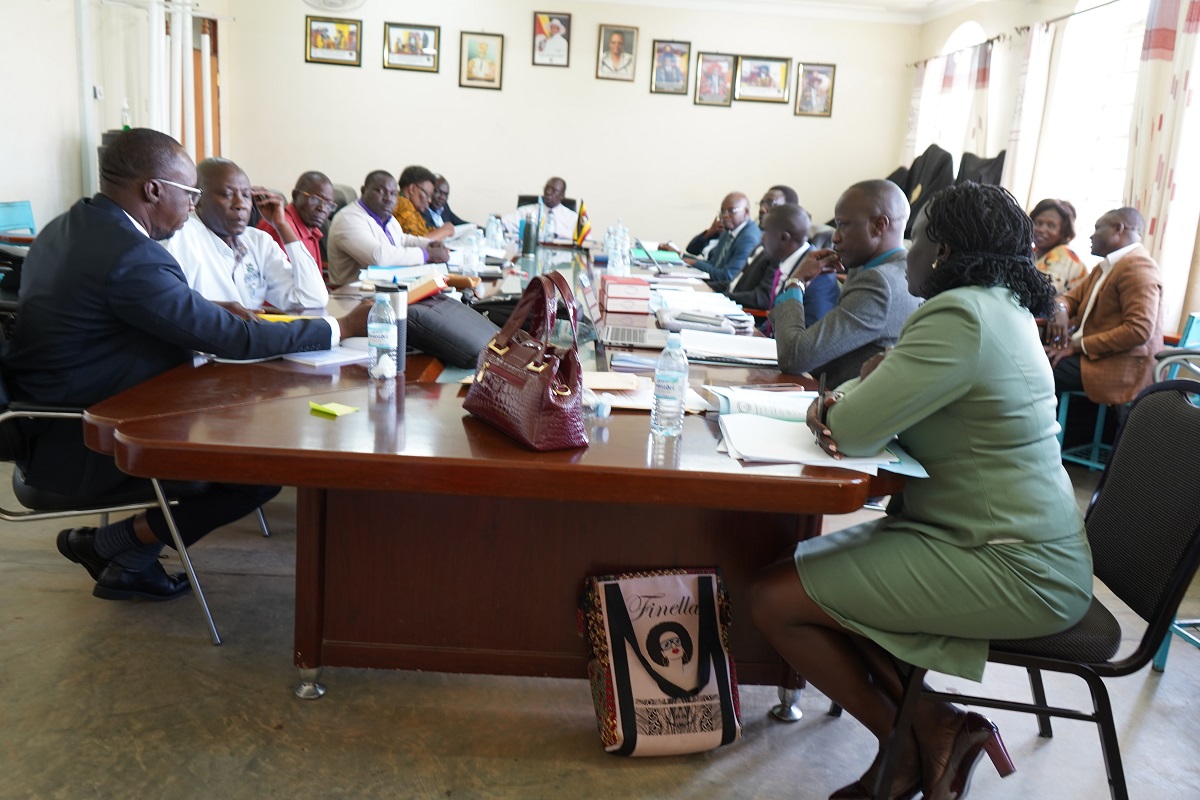
Mr. Apenyo was making the presentation to the University Appointments Board meeting held at the Public Health Board Room on 21st September 2026.
He said the increment in the staff establishment resulted from strengthening academic functions of the University Teaching Hospital, creation of Amolator Satellite Centre and three new faculties (Science, Arts and Humanities and Agriculture).
Although Lira University became autonomous in 2015, Mr. Apenyo said, its start-up structure had never been reviewed to align with its core mandate as stipulated in the Universities and Other Tertiary Institutions Act, adding that the University faces significant staffing shortages in both academic and administrative areas, leading to work overload, potentially affecting the quality of teaching, learning, and research.
Happy to note the positive trend in the staffing levels, the University Council Chairperson, Mr. David Geoffrey Opiokello urged the academic and non-academic staff to ensure effective provision of instruction to all those admitted to the University and make provision for the advancement, transmission and preservation of knowledge to stimulate intellectual life.
“As stakeholders, we need to do serious lobbying to attract more development funding for the University. It is unfortunate the university gets inadequate funds from Central Government yet there are several infrastructure projects to be undertaken,” Mr. Opiokello, former Deputy Governor, Bank of Uganda, said.
Mr. Bosco Onyik, the Chairperson of the Appointment Board praised the University Team for their efforts in disseminating knowledge, giving opportunity of acquiring higher education to all persons, including persons with disabilities, regardless of race, political, opinion, colour, creed or sex.
To achieve the development dream of the university, Mr. Onyik called for team spirit and work harmony between the technical staff and Council members. “I am happy now that the Council and the University Management are speaking one language of unity of purpose-developing Lira University to greater heights,” Mr. Onyik said.
Vice Chairperson Council, Ms. Nellie Florence Okullo said, with the new structure, if staff are appointed in the key positions, Lira University will continue taking a center stage in providing quality teaching and learning, research, innovation in value-added health sciences outputs that is relevant and competitive.
To achieve this, Ms. Nellie advised the University Management Team to consider strong collaboration linkages between other universities within and outside Uganda, the Ministry of Education and other relevant training Institutions in the Country.
The Ag. Deputy Vice Chancellor (Academic Affairs), Assoc. Prof. Judith Akello Abal, revealed that more than 3,000 students have been admitted during this academic year. “This reflects the growing public confidence in the University and its academic programmes. Management remains committed to providing all students with a supportive environment and quality education,” she said.
Prof. Akello Abal, who represented the Vice Chancellor, Prof. Jasper Ogwal Okeng, said the expansion of academic programmes, and growing student enrolment have increased operational demands. She further explained the university’s success stories as the ongoing infrastructure developments, including workshops, laboratories, and lecture theatres.
Consequently, Prof. Akello Abal said, the University had requested the Ministry of Public Service to assess and realign its structure and staffing levels to address these emerging challenges and support its expanded mandate, the prayer well heeded to.
Prof. Abal revealed that several new Competency-Based Curriculum programmes are awaiting accreditation as others have received approval of their financial implications, adding that this indicates the University’s continued commitment to expanding relevant academic opportunities that respond to national priorities and the evolving needs of society and the labour market.
Ag. University Secretary, Mr. Atim Tom said the scope of the assignment covered a comprehensive review of Lira University, and involved consultations with the University management, staff and benchmarking of other Public Universities.
“From this new establishment structure, we shall derive the Annual Recruitment Plans to guide filling vacant positions and lobbying for more wage allocations for the university,” Mr. Atim said.
He said the structure for Lira University has been re-aligned with the UOTIA Act, 2001 and the Lira University Strategic plan (2025/26-2029/30), harmonized and standardized basing on the homogeneity of the functions and the current demands of services delivery.
Other members who attended the meeting were Dr. Omara Robert, Mr. Odongo Fredrick Dickens, Mr. Ongom Fred Ojok , Mr. Jokkene Timothy Okee, Ag. University Bursar, CPA. Elemu Anthony, Senior Legal Officer, Mr. Evans Olwoch and Senior Human Resource Officer, Ms. Finella Apio. Several issues including human resource management and recruitments were discussed.
FACULTIES AND DEPARTMENTS
1. FACULTY OF NURSING AND MIDWIFERY
(i) Midwifery Department
(ii) Nursing Department
(iii) Emergency Department
(iv) Pediatrics and Child Health Nursing Department
(v) Psychiatric Nursing Department
2. FACULTY OF PUBLIC HEALTH
(i) Biostatistics Department
(ii) Epidemiology Department
(iii) Environmental Health Department
(iv) Disease Control Department
(v) Health Planning, Policy and Management Department
(vi) Community Health Department
(vii) Nutrition Department
3. FACULTY OF MEDICINE
(i) Lira University Teaching Hospital
(ii) Anatomy Department
(iii) Physiology Department
(iv) Biochemistry Department
(v) Microbiology & Immunology Department
(vi) Pharmacology and Therapeutics Department
(vii) Pediatrics & Child Health Department
(viii) Obstetrics & Gynecology Department
(ix) Internal Medicine Department
(x) Surgery Department
(xi) Anesthesiology Department
(xii) Pathology Department
(xiii) Orthopedics Department
(xiv) Ear, Nose and Throat (ENT) Department
(xv) Ophthalmology Department
(xvi) Radiology Department
(xvii) Clinical Psychiatry Department
4. FACULTY OF MANAGEMENT SCIENCES
(i) Public Administration & Management Department
(ii) Accounting and Finance Department
(iii) Economics & Statistics Department
(iv) Marketing and Entrepreneurship Department
(v) Procurement and Logistics Management Department
5. FACULTY OF SCIENCE
(i) Biology Department
(ii) Mathematics Department
(iii) Physics Department
(iv) Chemistry Department
(v) Sports Science Department
(vi) Environmental Science Department
6. FACULTY OF EDUCATION
(i) Curriculum and Media Studies Department
(ii) Education Administration Department
(iii) Education Foundations Department
(iv) Educational Technology Department
7. FACULTY OF AGRICULTURE
(i) Agricultural Extension Department
(ii) Agricultural Engineering Department
(iii) Postharvest Technology and Food Processing Department
(iv) Animal Science and Veterinary Medicine Department
(v) Crop Science and Production Department
(vi) Agricultural Economics and Agri-Business Department
(vii) Marine Sciences Department
8. FACULTY OF ARTS AND HUMANITIES
(i) Psychology Department
(ii) Languages and Literature Department
(iii) History and Political Science Department
(iv) Geography Department
(v) Religious Studies and Ethics Department
(vi) Art and Performing Arts Department
(vii) Mass Communication and Journalism Department
9. FACULTY OF COMPUTING AND INFORMATION SCIENCES
(i) Computer Science Department
(ii) Information Technology Department
(iii) Library and Information Science Department