By Patrick Opio
Senior Communications Officer
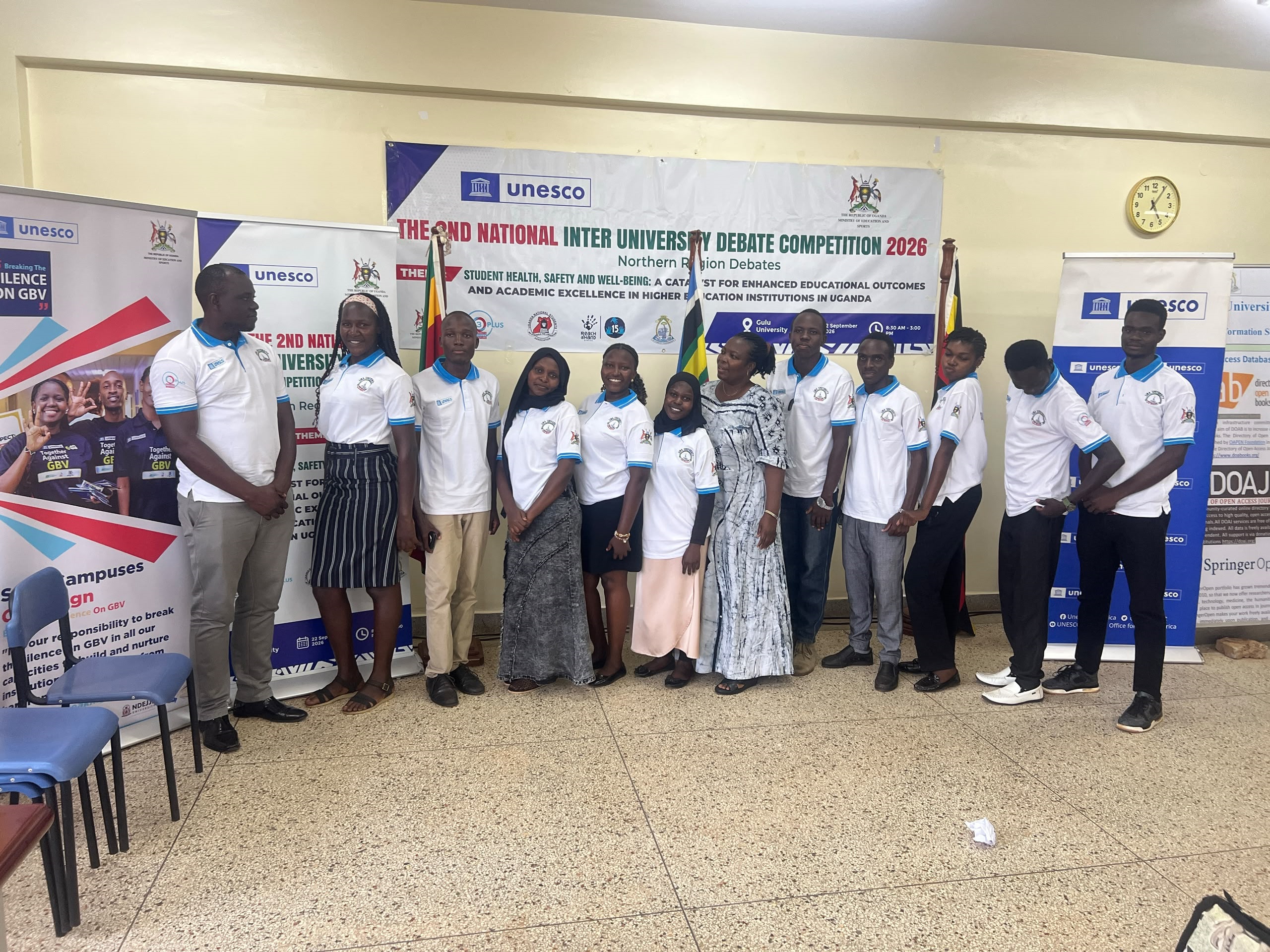
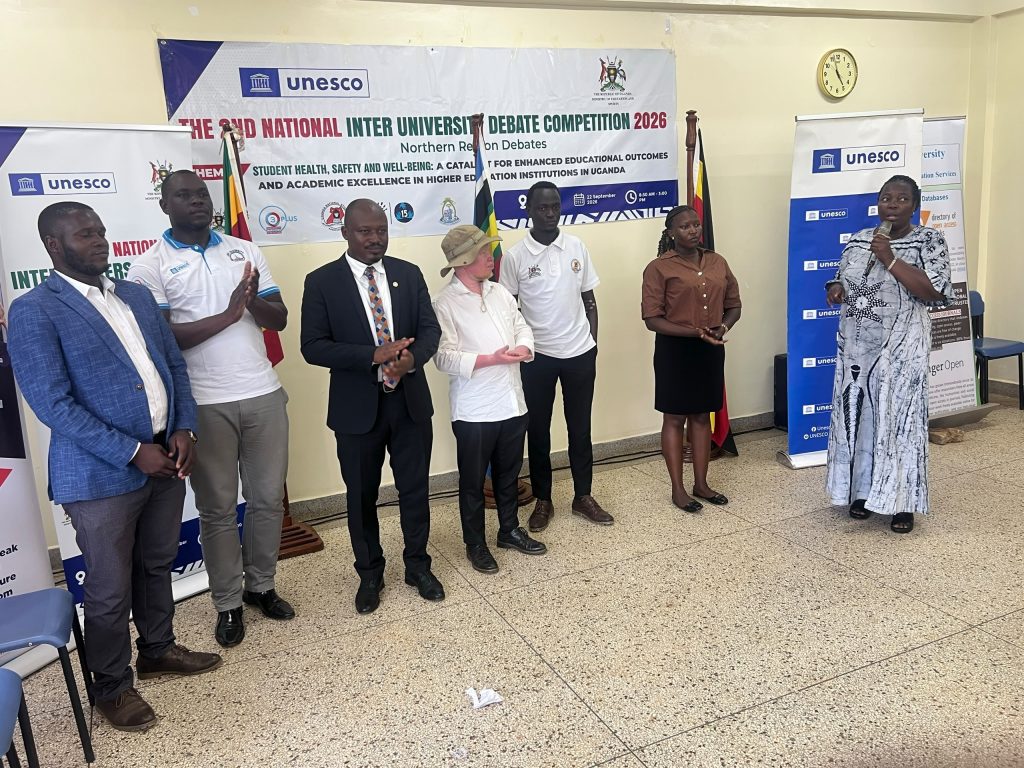
Lira University was declared the Northern Uganda Champion of the Regional National Inter-University debate held in Gulu University on 22nd September 2026.
Lira University triumphed with 456 points followed by Gulu University which garnered 455 points. Muni University and All Saints University-Lango tailed with 403 and 390 points respectively.
Lira and Gulu universities qualified to participate at the national level of the debating competitions on 29th September 2026 in Kampala.
The primary objective of the UNESCO-supported inter-university debates in Uganda, to empower higher education students to critically analyze and propose youth-led solutions to pressing health and wellbeing challenges on campus.
The debate is organised by UNESCO in conjunction with the Ministry of Health, Ministry of Education and Sports and Ministry of Gender, Labour and Social development.
Benefits of the debate
- Promote Dialogue on Sexual and Reproductive Health (SRH): Create open platforms to discuss HIV prevention, reducing early/unintended pregnancies, and eliminating sexually transmitted infections (STIs).
- Combat Gender-Based Violence (GBV): Raise awareness and dismantle harmful social norms contributing to harassment, bullying, and gender-based violence in tertiary institutions.
- Institutionalize Mental Health Awareness: Foster discussions around managing psychological distress, drug/substance misuse, and emotional wellbeing among university students.
- Link Health to Academic Success: Highlight how safeguarding student health directly correlates with improved educational outcomes and completion rates in higher education
Other benefits to the students
- Youth Empowerment and Leadership: Equips student debaters and peer educators with accurate life skills and advocacy tools to guide their peers.
- Policy and Institutional Reform: Helps universities transition from isolated awareness campaigns to structured support systems, safer campus policies, and better referral pathways to health services.
- Safe and Inclusive Campuses: Contributes to long-term campaigns that make learning environments more supportive, dignified, and inclusive